
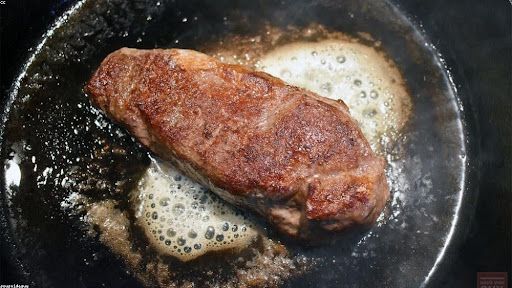
Ask a home cook a few years ago why a seared steak tastes better than a boiled one, and you’d probably get “it’s the crust” or a shrug. Ask the same question today and there’s a decent chance you’ll hear the actual term: the Maillard reaction, the chemical process where proteins and sugars react under high heat to create the browning and flavor compounds that make seared food taste the way it does. That’s a meaningful shift in vocabulary for something that used to live entirely in professional kitchens and food science textbooks.
Vocabulary Changed Because the Stakes Got More Specific
Part of what drove that shift is the rise of tools and content that treat cooking temperature as a precise variable instead of a rough guideline. “Medium-high heat” is a vague instruction that leaves a lot of room for a bad result. A specific internal temperature target, paired with an explanation of what’s actually happening to the protein structure at that temperature, gives a home cook something they can actually aim for and troubleshoot when it goes wrong.
That’s the exact gap tools like the Maillard Texture Mapper are built to close, mapping how a protein’s structure shifts across a thermal range, from a raw, moisture-heavy state through the precise window where browning develops, and on to the point where things overcook and dry out. Seeing that progression mapped out turns a vague sense of “don’t overcook it” into an actual target range worth aiming for.
The Home Cook’s Version of a Lab Notebook
Professional kitchens have always treated searing as a controllable variable, adjusting pan temperature and timing with the kind of precision that comes from doing the same dish hundreds of times. Home cooks never had that repetition to build the same instinct, which is exactly why specific temperature targets and visual mapping tools matter more for a home kitchen than a professional one. The instinct that a line cook builds over years gets replaced by a number and a description a home cook can actually reference mid-cook.
Sites documenting this shift, like Enjoy This View Collective, have leaned into that same specificity across their content, treating searing, roasting, and browning less like intuition-based cooking and more like a repeatable process with actual variables a person can control.
Understanding the Chemistry Doesn’t Make Cooking Less Fun
There’s a reasonable worry that turning cooking into a chemistry lesson strips out the joy of it. In practice, the opposite tends to happen. Knowing why a technique works makes it easier to adapt when something doesn’t go according to plan, whether that’s a thicker cut of meat, a colder starting temperature, or a different pan than usual. The science doesn’t replace the intuition. It gives the intuition something solid to build on, which is a better foundation than years of guessing ever was.
The Vocabulary Shift Isn’t Going to Reverse
Once a home cook understands why a hot, dry pan produces a better crust than a crowded, steamy one, that knowledge doesn’t fade the way a one-off tip usually does. It becomes part of how they think about cooking generally, applied automatically to the next dish and the one after that. That’s a meaningfully different outcome than memorizing a single recipe’s instructions, because the underlying principle transfers to situations the original recipe never covered.
That’s probably the real story behind the sudden fluency with Maillard vocabulary. It’s not that home cooks suddenly became amateur chemists for the fun of it. It’s that understanding the actual mechanism turned out to be the fastest way to stop guessing and start getting a consistent result, and once that clicked, there was no real reason to go back to vague instructions and hoping for the best.